The Story
The Taylor family has been in Emery County for more than a hundred years. They homesteaded there, and raising cattle, in their own words, is a large part of the family heritage. But the farm as it exists today did not start as a beef business. It started as a demonstration.
About 25 years ago, David Taylor bought the farm from a man named Reed Larson. The family's actual work was minerals: mining organic fertilizers and animal feed supplements for worldwide distribution, a business that still operates today as LiveEarth. David wanted a working farm to prove the products out, a place where he could show what organic inputs did to real ground and real animals. So he made the farm certified organic and ran it as a model.
By the family's account, that decision made him the first certified-organic beef producer in the state of Utah, and it drew a Salt Lake Tribune writer out to Emery County for a piece the family still links to, headlined "Organic Cowpokes." People read it, asked about the beef, and started buying it direct. The side business grew from there.
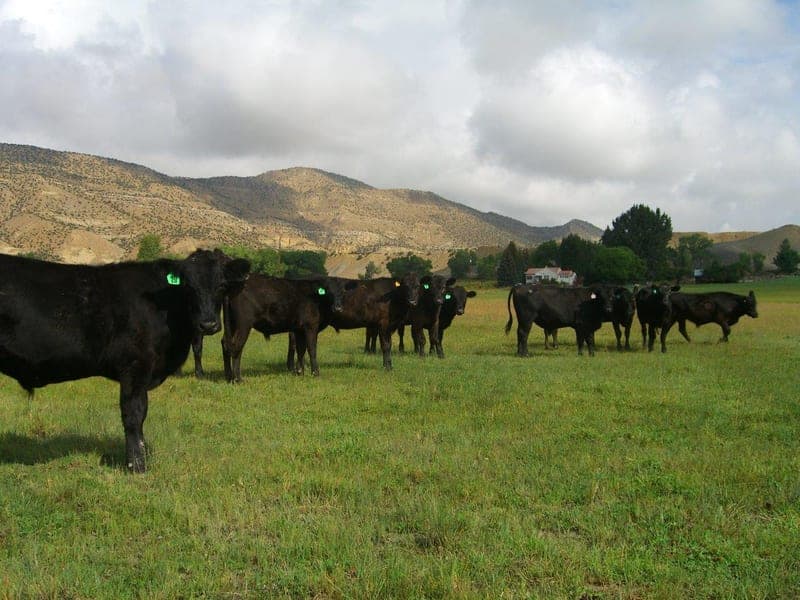
The cattle, a mix of Black Angus and Maine-Anjou, have been raised on grass since 1993. The original house and fields are still farmed by David's son Keith. Russ Taylor fields the orders now. It remains a small operation, run alongside the mineral work it was built to demonstrate, and the family has said plainly that they have no interest in expanding it.
The Practices
Taylor Made's beef is grass-fed and USDA Certified Organic. Their public framing is consistent across the site: the cattle graze certified-organic pasture year-round and are supplemented with organic hay in winter when there's snow on the ground. The herd ranges over roughly 250 acres of that certified pasture. We haven't verified the operation on the ground, but USDA organic certification is a real, auditable status, which puts Taylor Made on different footing from producers who use "organic practices" language without carrying the certification.
The organic certification carries through to processing in a way worth understanding. Because the beef is certified organic, it has to be slaughtered and processed separately from conventional beef, with the plant cleaned between runs. That's a real cost and a real constraint, and it's part of why production is small and occasionally has gaps. The carcasses are dry-aged, then cut, wrapped, and frozen, with about a three-week turnaround from the time an animal is ordered, since the cattle are live at the time of sale.
One distinction is worth being precise about. Taylor Made's public materials use "grass-fed" and "certified organic" rather than the "grass-finished" or "100% grass-fed, never grain" language some other producers in this directory state explicitly. Organic certification governs what inputs are allowed, not whether an animal ever sees grain, so the two claims are not identical. Their site describes year-round grazing supplemented with organic hay and makes no mention of grain, which points to a grass-based program. A buyer who wants a guaranteed zero-grain finish can confirm the feeding program directly with the family.
The cattle are Black Angus and Maine-Anjou, a cross that's common in grass operations for the Maine-Anjou's frame and the Angus's finishing quality on forage.
Taylor Made Beef carries third-party certification: USDA Organic. Those bodies maintain public producer rosters that this listing has been cross-referenced against. They ship nationally to the continental US.