The Story
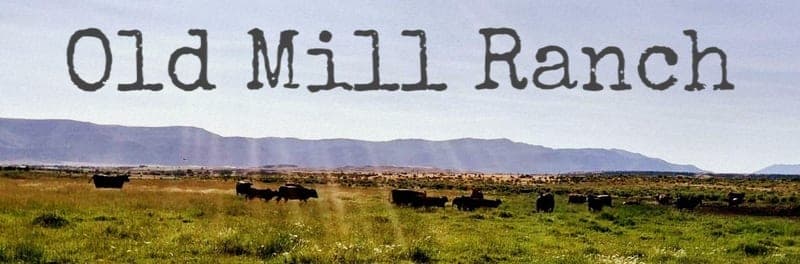
Old Mill Ranch is a long-memory place. The family has farmed in the Sanpete Valley since 1897, and the ranch takes its name from a mill built on Old Mill Road back in the 1800s. There is no sign on the winding dirt road that leads in, the family notes, but the locals all know where to find them. They call the spot The Bottoms, because the ranch sits at the bottom of the valley, where the ground and the flowing creeks produce beef that, the family reports, customers keep calling the best they have ever tasted.
For most of its history the ranch did what valley ranches did, raising cattle the way they had always been raised. The shift came in 2013, when the younger generation took over and, in their words, switched things up from the way things were always done by starting to sell their beef straight to consumers. It is a familiar arc in this directory, an established ranching family deciding to shorten the distance between its pasture and its customers' tables, and Old Mill tells it without fuss.
Five children grew up on the ranch. Today two of those siblings and their families run it: Kevin and Amy, and Daniel and Tia. It is a genuinely small, genuinely generational operation, the kind where the herd is sized to the land and the hay is grown in the same valley the cattle graze.
What comes through is a quiet confidence rooted in place. The family does not reach for slogans. It talks about its creeks, its ground, its dirt road, and the simple proposition that beef raised slowly on this particular bottomland tastes better than beef raised any other way.
The Practices
Old Mill Ranch is, by its own clear description, a true grass-finished and grain-free operation, which distinguishes it from the several grass-started, grain-finished ranches that share this directory. The family states the cattle are always grass-finished and grain-free, and that letting the beef grow to full size naturally means accepting an extra year of investment in feed and care before an animal is ready. That patience is the practice.
The land management is specific and sensible for a dry valley. The herd free-ranges and rotates pastures regularly, which lets manure compost back into the ground naturally, and the family keeps the herd only as large as the land will naturally support. They plant drought-tolerant grasses and conserve water by keeping their irrigation in good order. The grass and alfalfa hay the cattle eat is grown by the family itself, and they state it is free of pesticides and herbicides. In winter the herd still free-ranges but is fed from the manger in the family's barn.
Each calf is born and raised on the ranch, and the family states no hormones or antibiotics are used in their care. The operation describes itself as practicing good land stewardship, and the details, herd sized to the land, home-grown clean hay, an extra year of growth, support that framing rather than just asserting it. We haven't stood in the pasture and watched, but Old Mill's grass-finished, grain-free claim is stated plainly and is backed by specific, checkable practices, which is exactly the transparency PRB looks for.
Old Mill Ranch lists grass-fed, grass-finished, no antibiotics, and no hormones on their public-facing materials. These are the producer’s own claims; we do not independently audit them. Available locally in Utah.