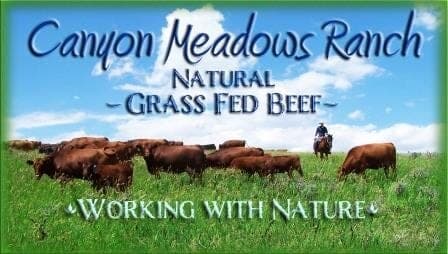
The Story
Folke Myrin founded the ranch near Altamont in 1946, in the high, dry country where the southern slope of the Uinta Mountains lets down into the basin. The barn he built that decade still stands, and the family still uses it. Three generations of Myrins have worked the place since, and a fourth is coming up on it now, learning the animals, the land, and the seasons the way you only can by being born into them.
For sixty-odd years the ranch raised cattle the way the country around it did. The turn came in 2008, when the family started selling grass-fed beef straight to the public. That single decision rerouted everything: a remote cow outfit at the end of a long dirt road became, in effect, a regional food brand, one whose beef now turns up in more Salt Lake City kitchens than a place this far out has any business reaching.
The land does most of the work, and the family seems to know it. The ranch is a patchwork of irrigated and spring-fed meadows, hay fields, wild river-bottom, and dry pasture under the Uintas. Calves drop in spring and grow up on green meadow; a portion of the herd summers high on national forest range, comes home in the fall, and winters on the ranch grazing forage left standing for the purpose. The same ground feeds mule deer, elk, turkey, waterfowl, and beaver. In the family's own photographs, a cow moose wanders through with a calf at her side, as if she has every right to be there. On this ranch, she does.
The Practices
Canyon Meadows describes its beef as Verified Natural Grass Fed, and the claims it makes are more checkable than most. The family points to third-party process verification: their beef is Source, Age, Natural, and Grass-Fed Verified through IMI Global, Inc. (the Where Food Comes From program), a USDA process-verified company, and they state it meets the USDA's NeverEver3 guidelines, meaning the animals were never given antibiotics, growth promotants or added hormones, or animal by-products. They also hold a GAP 4 certification from the Global Animal Partnership, a tiered animal-welfare standard that is meaningfully harder to earn than a bare "grass-fed" label and rare among ranches this size. We haven't stood in the pasture and watched, but the certifications are named, specific, and independently checkable, which is the kind of claim PRB trusts.
The beef itself is dry-aged and USDA-inspected. The family processes at local, family-owned facilities, transports the animals themselves, and distributes the cut and wrapped meat. They state the beef is grass-fed from start to finish, that the animals graze their pastures and never receive grain, and that every cow and calf is born and raised on the ranch.
On management, the family's own framing is specific, and a little old-fashioned in the best sense. They raise a Red Angus base herd and call their approach "generative production methods," with rotational grazing timed so the grass gets grazed and then left alone long enough to come back stronger, which builds soil over time. One practice is worth naming because it cuts against the grain of how most modern hay gets put up: rather than baling every field with tractors, they turn the cattle out onto more of the hay ground and the last crop standing, letting the animals do the harvesting and put the nutrients right back where they came from. When they do feed hay in winter, they spread it across the fields in rows instead of dumping it in one place, so the ground gets fed evenly. It is the kind of thing a family does when it intends to hand the same dirt to the next generation.
The herd's year follows the country more than the calendar. Calves are born in spring on the meadows. A good share of the cattle summer high on forest range, then trail home in the fall for weaning. The cows winter on the ranch on stockpiled forage, with hay carried out when the snow gets deep. Through all of it the place stays full of wildlife, which the family treats as a feature of good ground rather than a nuisance to manage around.
It adds up to a large operation by direct-market standards, large enough to keep roughly a dozen retailers, several restaurants, four farmers markets, and a nationwide shipping store in beef at the same time, run by one family at the end of a long road.
Canyon Meadows Ranch carries third-party certification: Global Animal Partnership and Where Food Comes From Verified. Those bodies maintain public producer rosters that this listing has been cross-referenced against. They ship nationally to the continental US.