The Story
The Carlsons came to ranching from two directions that met in the middle. Shanna spent childhood summers driving between Duchesne, Utah and Ramah, New Mexico to work on her grandfather's cattle ranch, moving cows between grazing ranges and vaccinating animals, and it was there she fell for the livestock life. Bjorn grew up on a ranch his father and grandfather bought in Bluebell, in northeastern Utah, and says he knew by the age of five or six that ranching was what he wanted.
A sister introduced them, they married fast, and they shared a single dream: to keep the ranching tradition going. But it did not happen right away. Through the early years of their marriage they both worked in law enforcement, Shanna as a corrections officer and Bjorn as an adult probation and parole agent, planning and saving for the day they could farm for themselves.
That day came in 2011, when they took what they call a big leap of faith, left their jobs, and started Blue Tree Farms full-time. They began with 50 Angus cows. The herd has since grown to around 150. The ground Blue Tree runs on is the same land Bjorn's parents and grandparents bought in the early 1980s, and the family home was built by his great-grandfather, a detail that matters to them: one of their sons has already announced he intends to live there someday and carry the operation forward.
It is, by their own emphatic description, a family farm. All four children have roles, summer days run from six in the morning to ten at night, and the kids compete in Future Farmers of America and float business ideas at the dinner table. Shanna's working philosophy, inherited from her old-school cowboy grandfather, is "slower is faster": get loud and frantic in a pen of cows and they scatter; stay calm and quiet and the work goes better.
The Practices
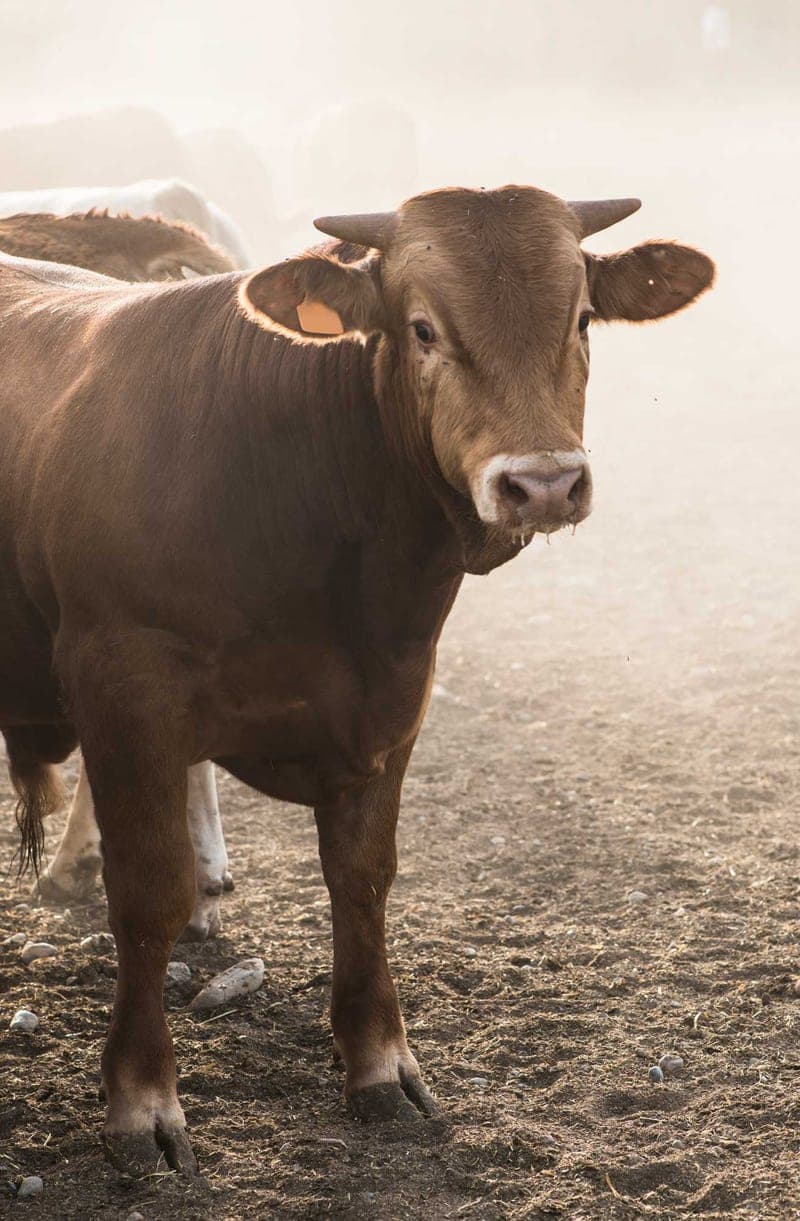
Blue Tree's beef and lamb are 100% grass-fed and grass-finished. The cattle are Angus, a breed Shanna values for being smart, predictable, and easy to work with, and they graze privately owned pastures in the Uinta Basin where, as the farm describes a typical day, the animals lounge in tree shade, drink from natural springs, and eat chemical-free grass. The animals are never given added antibiotics or growth hormones; if an animal does require antibiotics, the farm states it is separated from the herd and not sold for human consumption.
Around the beef, the family has diversified in response to customer demand. They raise 100% purebred Kurobuta-Berkshire hogs, an English heritage breed prized for marbling and tenderness that the farm says supplies some top restaurants, along with grass-finished lamb and free-range chickens fed non-GMO grain. The mix is deliberate: cattle, sheep, and pigs forage differently, which the family argues keeps the land more productive and the animals healthier than a single species would.
Everything is processed locally in Utah under USDA inspection. The Carlsons present themselves as having refined their production and processing over years of doing it, and they lean on the standard nutritional case for grass-fed meat, higher CLA and omega-3 content, as part of their pitch. We haven't stood in the pasture and watched, but the grass-finished claim is stated plainly and consistently, the family and its history are documented in specific detail, and the farmers-market presence makes the operation easy to encounter in person.
Blue Tree Cattle Co. lists grass-fed, grass-finished, no antibiotics, no hormones, and pasture-raised on their public-facing materials. These are the producer’s own claims; we do not independently audit them. Available locally in Utah.