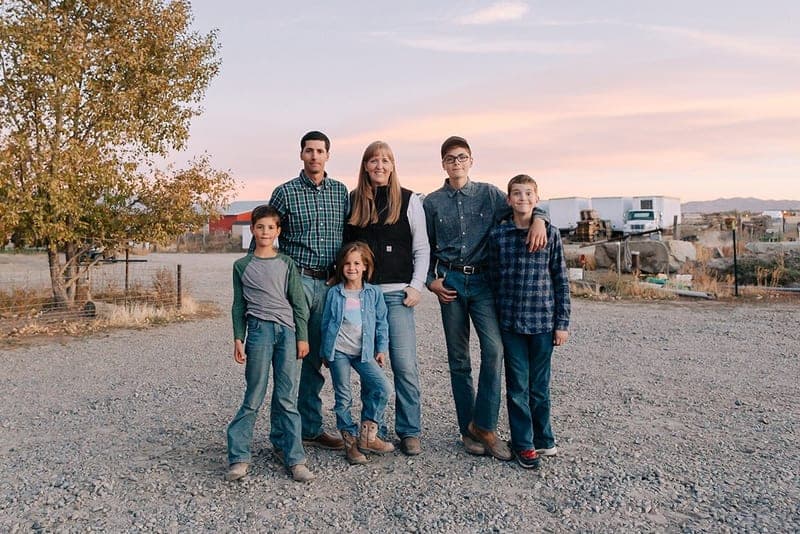
The Story
Five generations ago, the Braswells were dairy farmers in Southern Utah. Grandpa Braswell spent his mornings and evenings with his cattle, milking them by hand and bottle-feeding calves. Shayn Bowler's parents carried that forward to a homestead in West Jordan, where Shayn grew up hauling hay, milking cows, and working alongside his three brothers.
When Shayn and Kristen married, they kept raising their own meat, splitting beef between families each year, the way their parents and grandparents had. In the fall of 2009, they had a couple of extra steers and asked friends whether anyone wanted in. The response surprised them.
They set up shop in the garage. Word spread. A real farm store followed, then a poultry butcher shop, then greenhouses, then a small raw-milk dairy, then a red-meat butcher shop. A goat dairy came and went; the manager moved on in 2024 and the family decided to consolidate rather than backfill.
What hasn't changed is the core commitment to the traditional way of farming. Shayn and Kristen still raise their animals the way Shayn's grandfather did: outside, on grass, with the next generation already underfoot. The kids, described on the farm's site as "four little farmhands," feed calves and help drive the family's two draft horses, King and Paul. The farm is a working family business, not a brand built backward into a farm.
The Practices
The Bowlers' approach is what they call "back to basics." Their beef and lamb program is "Grass-Only," 100% grass-fed and grass-finished, never grain, no exceptions, on pasture year-round on their West Jordan farm and on a separate ranch the family owns. We haven't independently verified this on the ground, but their public framing is unambiguous and consistent across their site, store, and social channels.
Pork and poultry are pasture-raised and supplemented with a custom feed mix the family explicitly notes is free of corn and soy, a distinction worth knowing, since most "pasture-raised" pork and chicken in the United States is still finished on corn and soy feed. The farm uses what they call "organic practices" but is not USDA Organic certified, and they don't carry American Grassfed Association or Animal Welfare Approved certification.
A few things set the operation apart from the usual grass-finished playbook. First, a hydroponic fodder system: the Bowlers sprout barley indoors to extend fresh forage into the winter months, which is unusual at this scale and reflects a real interest in finishing quality, not a gimmick. Second, working draft horses, two Percherons named King and Paul, used for some of the farming work alongside the tractor. Third, full on-farm processing: their beef is harvested under USDA inspection and then dry-aged, hand-cut, and wrapped in a butcher shop on the same property where the animal was raised. That's rare. Most small ranches send animals out to a regional processor and lose any aging discipline in the handoff.
The animals are never given antibiotics or added hormones. The family describes themselves as following a head-to-tail philosophy, using as much of each animal as they can.
Utah Natural Meat lists dry-aged, grass-fed, grass-finished, no antibiotics, no hormones, and pasture-raised on their public-facing materials. These are the producer’s own claims; we do not independently audit them. Available locally in Utah.